
- Envir-Tree
What Qualifies as an Emergency Septic Service and What Does Not
Trees often show visible warning signs before they become unsafe, overgrown, or difficult to manage. When branches start dying, hanging too low, growing near structures, or shifting after storms, trimming may become more urgent than routine maintenance.
Ignoring these signs can increase the risk of falling limbs, property damage, blocked access, and weakened tree structure. Timely trimming helps remove problem branches before they create larger safety or maintenance concerns.
This blog explains seven warning signs that a tree urgently needs trimming. Each section covers what the sign means, why it matters, and how it can affect tree safety, property access, and surrounding outdoor areas.
1. Visible Dead or Dying Branches Throughout the Tree

Dead or dying branches are one of the clearest signs that a tree may need immediate trimming. These limbs no longer contribute to healthy growth and can become unstable over time.
As the condition worsens, weakened branches are more likely to break unexpectedly. Removing them promptly helps reduce safety risks and supports the overall condition of the tree.
How dead limbs affect tree health
Dead branches no longer transport water or nutrients and can prevent the tree from directing energy toward healthy growth. In some cases, decaying limbs may also attract insects or contribute to disease development.
Trimming these branches helps improve airflow and allows the tree to focus resources on healthier areas. This can support stronger long-term growth and better canopy development.
Why dead branches create safety hazards
Dead wood becomes brittle as it deteriorates, making it more likely to fall during wind, rain, or normal weather conditions. Even smaller branches can cause damage when they break unexpectedly.
Removing hazardous limbs helps protect nearby structures, vehicles, and people using the property. Prompt trimming also reduces the likelihood of emergency tree-related problems.
2. Overhanging Branches Near Roofs, Driveways, and Walkways
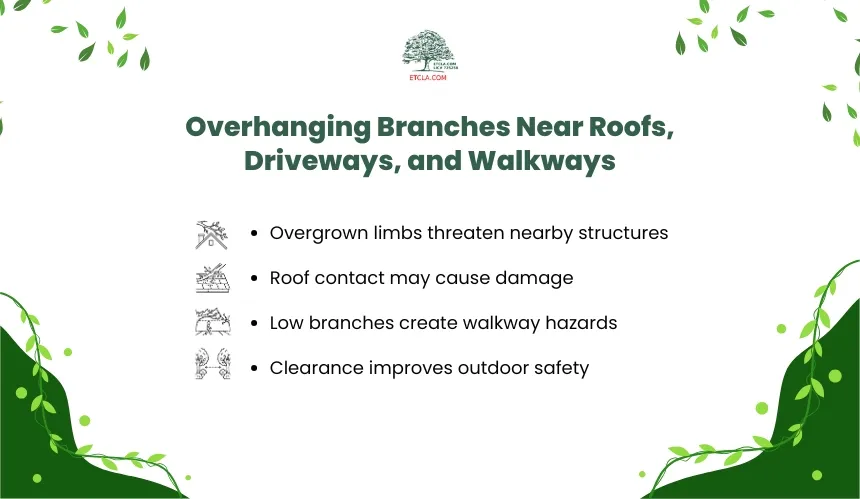
Branches that extend too close to structures or high-traffic areas are a strong indication that trimming should not be delayed. As trees continue to grow, these limbs can create both safety and property concerns.
Overhanging branches may appear harmless at first, but continued growth can increase the likelihood of contact with nearby surfaces. Trimming helps maintain proper clearance and reduces unnecessary risks.
How overgrown limbs threaten nearby structures
Branches hanging above roofs, garages, fences, and driveways can rub against surfaces during windy conditions. Continuous contact may contribute to damage over time and increase the chance of broken limbs falling onto the property.
Keeping these branches properly trimmed helps reduce stress on both the tree and nearby structures. It also prevents future growth from creating additional problems.
Why pedestrian and vehicle areas become higher risk zones
Walkways, patios, and driveways experience regular foot and vehicle traffic. Low or weakened branches above these areas can become hazardous if they break unexpectedly.
Maintaining adequate clearance helps create safer outdoor spaces for residents and visitors. Regular trimming also improves accessibility and reduces the chance of accidents caused by overgrown limbs.
3. Tree Limbs Growing Too Close to Power Lines
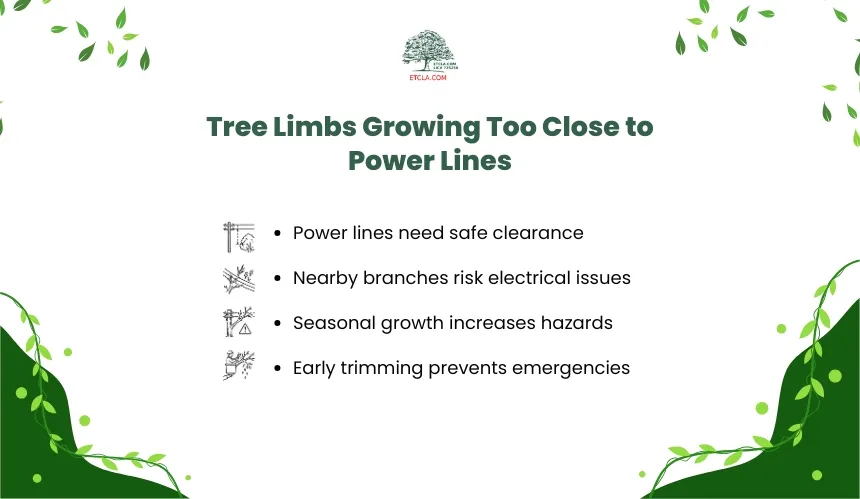
Branches approaching power lines should be treated as an urgent warning sign because continued growth can create serious safety hazards. Trees naturally expand over time, and limbs that seem harmless today may eventually interfere with electrical infrastructure.
Because power lines present significant risks, trimming should be addressed before contact occurs. Maintaining proper clearance helps protect both the tree and the surrounding area.
Why electrical clearance is important
Power lines require adequate separation from nearby branches to reduce the risk of electrical disruptions and hazardous conditions. Even indirect contact can create problems during storms or high winds.
Proper clearance helps support reliable utility service and minimizes the chances of tree-related electrical issues. Maintaining distance also protects nearby homes and properties.
How continued growth increases potential hazards
Tree limbs continue growing each season, gradually reducing the space between branches and electrical lines. Without regular trimming, this growth can eventually create unsafe conditions.
Allowing branches to remain too close to power lines increases the likelihood of storm damage and emergency situations. Addressing the issue early helps prevent larger problems in the future.
4. An Overgrown or Unbalanced Tree Canopy
A canopy that appears excessively dense, uneven, or heavily weighted on one side can indicate that trimming is overdue. As branches continue growing without maintenance, the overall structure of the tree may become less balanced.
An overgrown canopy can place additional stress on limbs and reduce the tree’s ability to withstand strong weather conditions. Proper trimming helps maintain a healthier and more stable structure.
How excessive growth affects tree stability
When too much growth develops in one area, the distribution of weight throughout the tree can become uneven. This imbalance may place additional strain on major limbs and attachment points.
Maintaining a balanced canopy helps support stronger branch structure and improves the tree’s ability to handle wind and seasonal weather changes.
Why dense canopies increase maintenance concerns
Heavy foliage can restrict airflow and reduce sunlight penetration throughout the canopy. These conditions may encourage moisture retention and make it more difficult to identify damaged or weakened branches.
Trimming excessive growth helps improve visibility within the tree and supports healthier overall development. It also prevents the canopy from becoming increasingly difficult to manage over time.
5. Cracked, Split, or Structurally Weak Branches
Visible cracks, splits, or weakened limbs are warning signs that a tree may require urgent trimming. Structural damage can reduce the strength of a branch and increase the likelihood of unexpected failure.
These problems may develop gradually through age, previous storms, excessive weight, or natural growth patterns. Addressing damaged limbs early helps prevent larger safety concerns.
What causes branch damage and weakening
Branches can weaken because of storm stress, heavy growth, previous pruning wounds, or natural aging. In some cases, repeated exposure to wind and weather gradually affects the integrity of the wood.
As damage progresses, the branch becomes less capable of supporting its own weight. Small cracks can eventually expand into more serious structural problems.
Why damaged limbs are more likely to fail
Cracked or split branches have reduced structural support and are more vulnerable during windy or severe weather conditions. Even normal environmental stress can cause weakened limbs to break unexpectedly.
Removing damaged branches helps reduce the risk of falling limbs and prevents additional stress from affecting the rest of the tree. Prompt trimming also helps maintain a safer outdoor environment.
6. Blocked Sunlight, Visibility, or Property Access
Trees that interfere with normal property use are often showing signs that trimming is needed. Excessive growth can gradually affect visibility, restrict movement, and limit the amount of sunlight reaching certain areas.
Although these issues may develop slowly, they can eventually affect both safety and the overall functionality of the property. Proper trimming helps restore balance and improve accessibility.
How excessive growth affects daily property use
Overgrown branches can extend into walkways, patios, driveways, and outdoor living spaces. As the canopy expands, homeowners may find certain areas more difficult to access or maintain.
Trimming helps create additional clearance and allows the property to function more efficiently. It also prevents continued growth from creating larger obstructions over time.
Why reduced visibility can create safety concerns
Dense branches may block sightlines near driveways, intersections, entrances, or pathways. Reduced visibility can make it harder for pedestrians and drivers to recognize potential hazards.
Maintaining proper clearance improves visibility and contributes to safer movement throughout the property. It also helps preserve the intended use of outdoor spaces.
7. Storm Damage That Leaves the Tree Unsafe
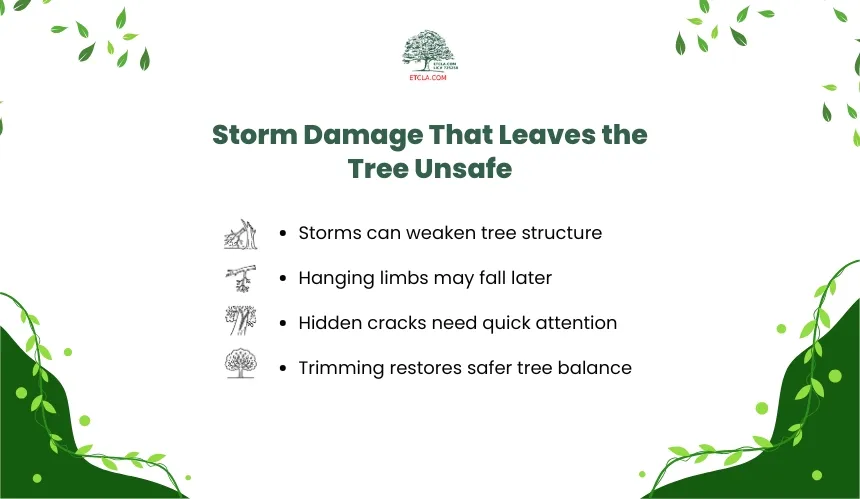
Recent storm damage is one of the strongest indicators that a tree may need immediate trimming. High winds, heavy rain, and severe weather can weaken branches and leave the tree structurally unstable.
Even when damage is not obvious from the ground, hidden cracks and partially broken limbs may remain suspended within the canopy. Prompt attention helps reduce the risk of additional failures.
Common signs of storm-related tree damage
Storm-damaged trees may show hanging branches, split limbs, broken tops, or sections of the canopy that appear uneven after severe weather. Sudden leaning or freshly exposed wood can also indicate structural problems.
These warning signs should not be ignored because damaged limbs often become more unstable with time. Early identification helps prevent conditions from worsening.
Why prompt trimming helps prevent additional problems
Removing storm-damaged branches helps reduce unnecessary stress on the remaining structure of the tree. It also minimizes the chance of weakened limbs falling during future weather events.
Addressing storm damage quickly helps restore balance and supports safer long-term tree growth. Timely trimming can also help prevent minor damage from developing into larger tree problems.
Frequently Asked Questions
Can a healthy tree still require urgent trimming?
Yes, even healthy trees can develop hazardous branches because of rapid growth, storms, or changing environmental conditions. Urgent trimming is often based on safety concerns rather than overall tree health alone.
How often should trees be inspected for trimming needs?
Trees should be inspected regularly throughout the year, especially after severe weather events. Routine inspections help identify developing problems before they become safety hazards.
Can overgrown branches damage a roof?
Yes, branches that rub against roofing materials or fall during storms can cause damage. Maintaining proper clearance helps reduce the risk of property-related issues.
Are hanging branches always considered dangerous?
Partially broken or hanging branches should be treated as potential hazards because they may fall unexpectedly. Prompt attention helps prevent injuries and property damage.
Can excessive canopy growth affect grass and landscaping below?
Yes, dense canopies can reduce sunlight and limit airflow around the landscape beneath the tree. This may affect the growth of grass, plants, and surrounding vegetation.